
Insomnia Tips That Actually Work: The Real Causes, Symptoms, and Science Behind Sleepless Nights
Medically reviewed by Max M Haque, Cari Callaway, PMHNP, Ohio Psychiatric Services- Updated August, 2026
It’s 2 a.m. The ceiling has never looked so interesting. Tomorrow’s meeting is replaying in your head for the fifth time, and somewhere between counting sheep and checking the clock, you’ve quietly become one of the hundreds of millions of people worldwide living with some form of insomnia. If this sounds familiar, you’re not broken, and you’re not alone. Understanding what’s actually happening in your brain and body is the first real step toward fixing it.
“Even the longest night must give way to morning. You don’t have to face
sleepless nights alone”
— Inspired by Abraham Lincoln
This is a deep, honest look at insomnia tips: what it is, why it happens, what it does to your body over time, and, most importantly, which insomnia treatments genuinely work, backed by decades of sleep science.
Sleep Disorders and Insomnia: Where It Fits
The insomnia symptoms usually show up in two places: the night and the day.
Nighttime insomnia symptoms include:
- Lying awake for 20 to 30 minutes or longer before falling asleep
- Waking up repeatedly through the night
- Waking too early and being unable to fall back asleep
- Sleep that feels light, broken, or non-restorative
Daytime insomnia symptoms are just as telling:
- Fatigue, low energy, or heaviness behind the eyes
- Irritability, mood swings, or a short fuse
- Trouble concentrating, remembering things, or making decisions
- Headaches or tension
- A growing anxiety about sleep itself, dreading bedtime because you expect to fail at it
If several of these insomnia symptoms show up at least three nights a week, it’s worth paying attention.
Insomnia Causes: What Really Keeps You Up at Night
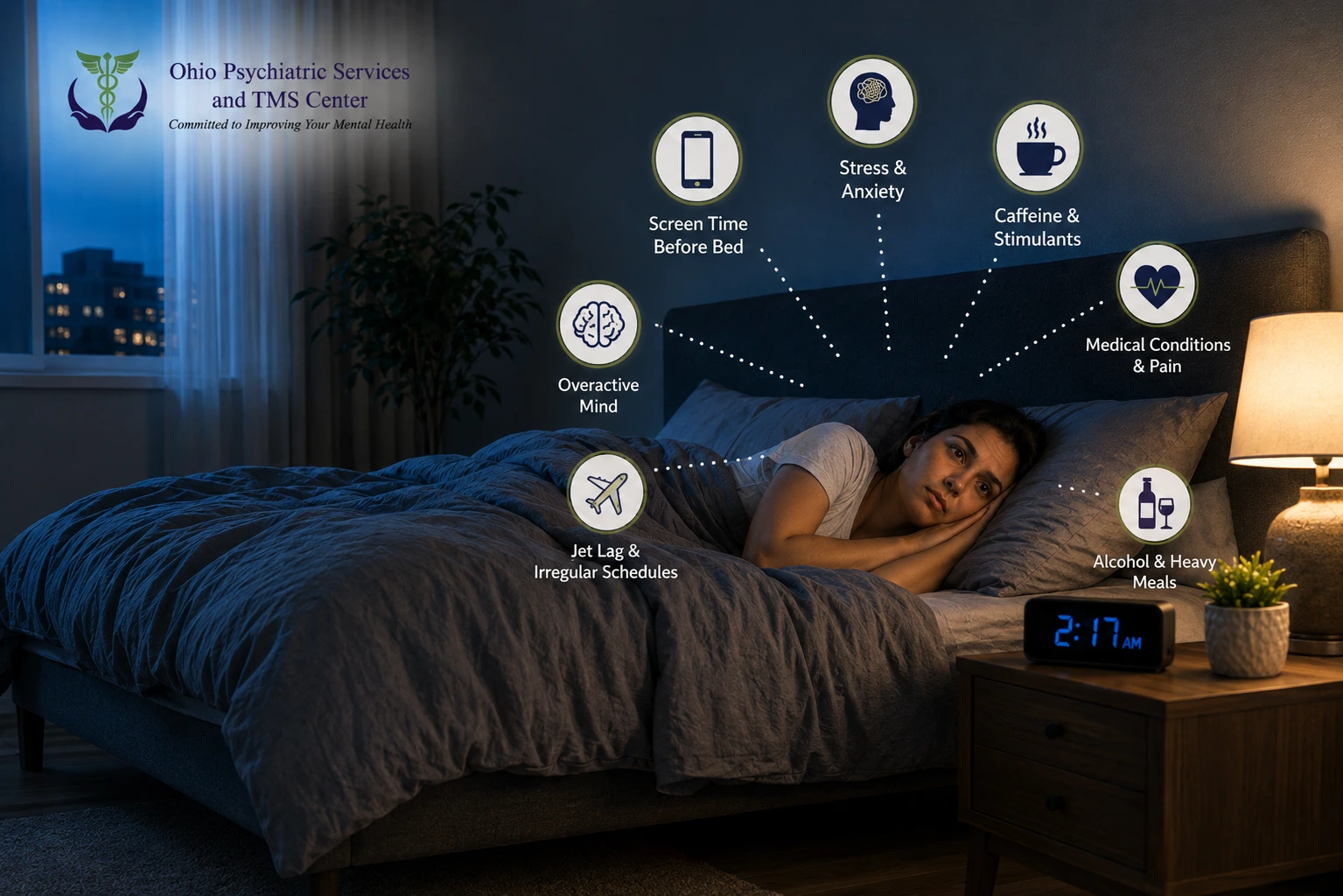
Ask most people why they can’t sleep, and the honest answer usually isn’t a single cause. It’s a tangle of them. Among the most common insomnia causes:
- Stress. Work deadlines, money worries, relationship strain, or grief keep the nervous system in a low-grade state of alert, which is biologically incompatible with falling asleep.
- Assumptions. Many people carry rigid, often incorrect beliefs about sleep: “I need exactly 8 hours or my day is ruined,” “If I don’t fall asleep in 10 minutes, I’ve failed.” These assumptions create performance pressure around something that should be effortless.
- Unwanted questions. The mind loves to interrogate itself at night: “Did I say the wrong thing today?” “What if this doesn’t work out?” This late-night rumination is one of the most common reasons people report lying awake.
- Other contributors include irregular schedules, screen exposure before bed, certain medications, caffeine or alcohol, and underlying medical or mental health conditions.
How long is too long? Insomnia that lasts only a few nights to a few weeks is generally considered short-term, or acute, often tied directly to a specific stressor like a big life event or travel. When the pattern persists and starts occurring most nights over an extended stretch (commonly discussed in the six-month to twelve-month range in sleep research), it’s regarded as chronic insomnia, and it typically won’t resolve on its own without some form of active treatment. The longer sleeplessness continues, the more it tends to become self-reinforcing: the anxiety about not sleeping becomes one of the insomnia causes.
Diseases Caused by Insomnia: Why This Matters Long-Term
Chronic sleeplessness isn’t just an inconvenience. It’s a legitimate health risk. Research has linked long-term insomnia to a range of diseases caused by insomnia and worsened by it, including:
- Hypertension and cardiovascular disease
- Type 2 diabetes and insulin resistance
- Obesity and metabolic dysfunction
- Weakened immune response
- Depression and anxiety disorders
- Cognitive decline and impaired memory over time
None of this is meant to alarm you. It’s meant to underline why treating insomnia early, rather than “toughing it out,” genuinely protects your long-term health.
Insomnia Treatments: Medication and Therapy
There are two broad paths to treating insomnia, and they work very differently.
Insomnia Medication
Insomnia medication can offer short-term relief and is sometimes appropriate as part of a broader plan, especially during an acute stressful period. Common categories a doctor may consider include:
- Sedative-hypnotics (such as zolpidem or eszopiclone), which help initiate or maintain sleep
- Orexin receptor antagonists (such as suvorexant), a newer class that dampens the brain’s wake-promoting signals
- Melatonin receptor agonists, which work with the body’s natural sleep-timing system
- Low-dose sedating antidepressants, sometimes used off-label for sleep maintenance
Medication can help in the short run, but it doesn’t address why the insomnia started, and most classes carry a risk of tolerance, dependency, or next-day grogginess with long-term use. This is exactly why major sleep medicine guidelines now recommend medication be paired with, or in many cases replaced by, behavioral therapy for lasting results. Any medication decision should be made with a doctor, not through self-adjustment or borrowed prescriptions.
Insomnia Cognitive Therapy: The Aaron Beck Connection
To understand modern insomnia cognitive therapy, it helps to go back to its intellectual roots. In the 1950s, psychiatrist Aaron Beck began questioning the dominant psychoanalytic approach of his era, and through the 1960s he developed what became cognitive therapy, built on a deceptively simple idea: how we think shapes how we feel, and how we feel shapes how we behave. Change the distorted or unhelpful thought, and the emotional and behavioral response often shifts with it.
That same principle became the backbone of Cognitive Behavioral Therapy for Insomnia (CBT-I), now considered the gold-standard, first-line insomnia treatment by major sleep medicine bodies, ahead of medication for long-term outcomes. CBT-I works by identifying and reshaping the anxious thoughts and assumptions around sleep (“I’ll never fall asleep,” “Tomorrow will be ruined”) while simultaneously retraining sleep-related behavior. It typically takes only a handful of structured sessions, and unlike medication, the benefits tend to hold up well after treatment ends.
Insomnia Therapies: 8 Evidence-Based Approaches
Sleep medicine researchers, including work reviewed by the American Academy of Sleep Medicine, have identified a set of behavioral insomnia therapies that consistently help. Here are eight worth knowing:
- Stimulus Control Therapy: Retrain your brain to associate the bed only with sleep: go to bed only when sleepy, get up if you can’t sleep within about 20 minutes, and avoid using the bed for work, scrolling, or watching TV.
- Sleep Restriction Therapy: Temporarily limit time in bed to match your actual sleep time, building sleep pressure so rest becomes deeper and more consolidated.
- Cognitive Behavioral Therapy (CBT-I): Directly targets the unhelpful thoughts and beliefs fueling the insomnia cycle, described above.
- Paradoxical Intention: Instead of trying hard to fall asleep, you deliberately try to stay awake, which paradoxically reduces the performance pressure that’s often keeping you up.
- Biofeedback: Uses real-time feedback on things like heart rate or muscle tension to help you learn to consciously lower physical arousal before bed.
- Regular Exercise: Consistent physical activity (ideally not too close to bedtime) improves sleep depth and helps regulate the body’s natural sleep drive.
- Waking Up at a Regular Time: Even after a rough night, keeping a fixed wake-up time, rather than sleeping in, helps anchor your body clock and improves sleep over subsequent nights.
- Sleep Hygiene: The supporting cast, from a cool, dark, quiet bedroom to limiting caffeine and alcohol and reducing screen light before bed. On its own it’s rarely enough, but paired with the therapies above, it matters.
Practical Insomnia Tips for Tonight
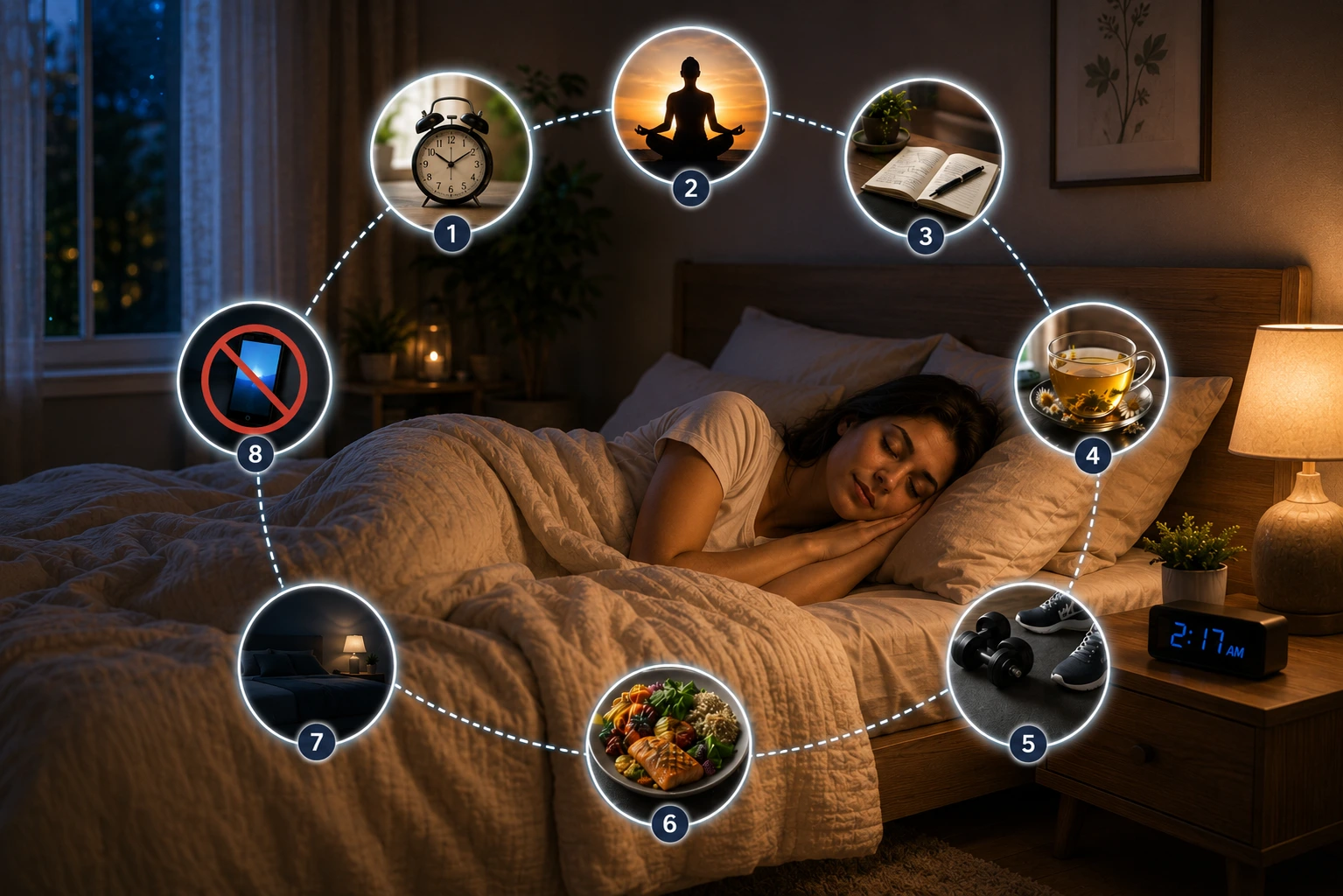
If you want a few insomnia tips to start using immediately, alongside the therapies above:
- Keep a consistent bedtime and wake time, even on weekends
- Get bright light exposure, ideally sunlight, early in the day
- Avoid caffeine within 8 to 10 hours of bedtime
- Write down tomorrow’s worries or to-do list before bed to get them out of your head
- If you’re not asleep after 20 minutes, get up and do something calm in dim light rather than lying there frustrated
- Reserve your bed for sleep, not for scrolling, working, or watching shows
When to See a Doctor
An occasional bad night is normal. But if sleeplessness has been a near-nightly pattern for weeks or months and is affecting your mood, work, or health, it’s worth speaking to a doctor or a sleep specialist. Chronic insomnia is highly treatable, often more effectively through structured therapy than through medication alone, and getting real support early can prevent it from becoming a long-term problem tied to bigger health risks down the road.
Sleep isn’t a luxury you have to earn. It’s a biological need, and when it breaks down, there are real, well-researched paths back to it.
Why Choose Ohio Psychiatric Services for Insomnia?
At Ohio Psychiatric Services, we look beyond sleepless nights to understand what may be causing them. Our team provides personalized, evidence-based care to help you manage insomnia, improve your sleep, and feel more like yourself again. Your first appointment is a conversation focused on understanding your needs and finding the right path forward.
Schedule Your Appointment
- Compassionate Care. Real Results.
Take the First Step
Toward Feeling Better
You don’t have to face ADHD, anxiety, depression, PTSD, OCD, or
treatment- resistant depression alone. Our experienced team will listen,
understand your concerns, and help you find the right path forward.
- Compassionate Care. Real Results.

- Your first appointment is a conversation, not a commitment. We're here when you are ready.
Frequently Asked Questions
No, insomnia is a persistent pattern, not an occasional rough night. It involves trouble falling or staying asleep despite having enough time and opportunity to rest. It’s distinguished from disorders like sleep apnea by being rooted in the mind and nervous system.
Acute insomnia lasts a few nights to a few weeks and is usually tied to a specific stressor. Chronic insomnia occurs most nights over six to twelve months or longer. The chronic form typically needs active treatment rather than resolving on its own.
Yes, daytime symptoms include irritability, mood swings, and trouble concentrating or remembering things. Headaches and tension are common too. Over time, these daytime effects compound into real cognitive impact.
Stress is a major driver, keeping the nervous system in a low-grade state of alert incompatible with sleep. But it’s usually combined with rigid beliefs about sleep and late-night rumination. Most insomnia is a tangle of causes, not one single trigger.
The brain’s overall metabolism drops, and cerebral glucose consumption falls significantly. This dip lets neurons ease their workload and clear metabolic byproducts. It’s part of what makes deep sleep genuinely restorative.
It retrains your brain to associate the bed only with sleep. You go to bed only when sleepy, and get up if you can’t sleep within about 20 minutes. The bed is reserved for sleep, not work, scrolling, or TV.
It temporarily limits your time in bed to match your actual sleep time. This builds sleep pressure, making rest deeper and more consolidated. It sounds counterintuitive, but less time in bed can mean better sleep.
Yes, consistent physical activity improves sleep depth and helps regulate the body’s natural sleep drive. It’s best done not too close to bedtime. It works alongside other therapies rather than as a standalone fix.
Sleep hygiene includes a cool, dark, quiet room and limiting caffeine, alcohol, and screen light. On its own, it’s rarely enough to resolve real insomnia. It matters most when paired with therapies like CBT-I or stimulus control.
Get up and do something calm in dim light rather than lying there frustrated. Staying in bed awake trains your brain to associate the bed with wakefulness. This is a core principle behind stimulus control therapy.
This article is intended for educational and informational purposes only and should not be considered medical advice, diagnosis, or treatment. Insomnia and sleep problems can have various underlying causes, and the information provided here may not be suitable for everyone. If you experience persistent sleep difficulties or have concerns about your health, consult a qualified healthcare professional for personalised guidance. Never disregard professional medical advice or delay seeking care based on information you read on this website.